Everything You Need to Know Before Your First eFoil Lesson
What actually happens in a first Fliteboard lesson in Mayakoba — how the session is structured, what you will feel, and how quickly most guests fly.
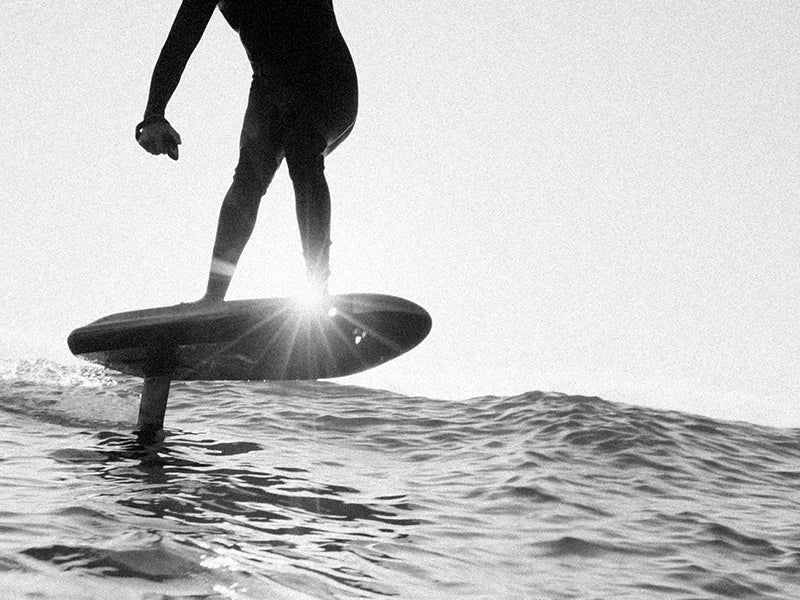
Almost everyone arrives for a first eFoil lesson with the same two questions: is it hard, and is it safe? The honest answers are that it is easier than it looks and safer than nearly every towed watersport — provided the session is structured properly. Here is what a first lesson with us involves, from the moment you arrive at the dock.
Before you get on the water
Every session starts on land with a short briefing. We cover the hand controller, the safety cut-off, how the board behaves when you fall, and how to get back on. It takes a few minutes and it removes most of the nerves, because the two things people fear — the board running away, and the foil being underneath them — are both directly addressed.
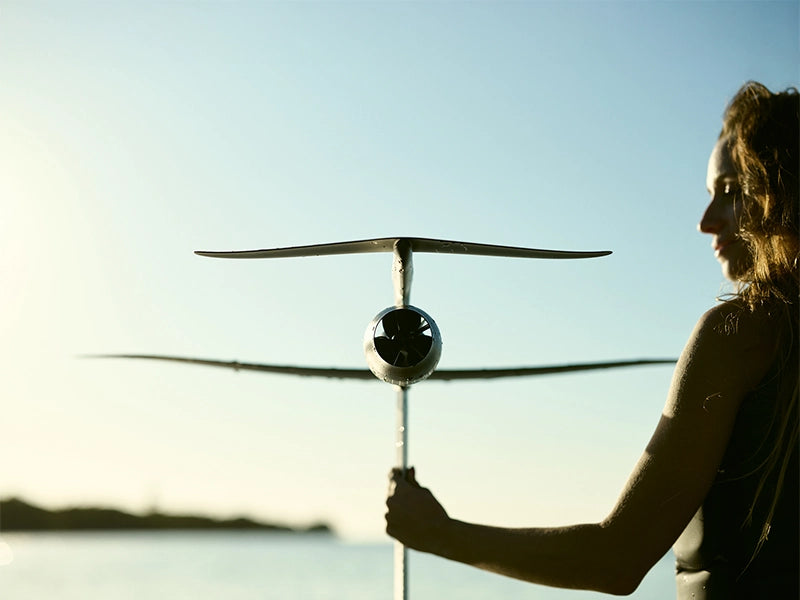
The propulsion is a sealed jet. There is no exposed propeller. The controller is in your hand, wireless, and the board stops when you stop asking it to go. Understanding those two facts changes the entire mood of the first ten minutes.
The four stages of a first session
We teach in a deliberate sequence, and we do not skip steps even for confident athletes. The sequence is what makes the progression fast.
- Lying down. You ride flat on the board, learning throttle control with no balance demand at all.
- Kneeling. Weight comes up, steering begins, and you learn how the board responds to small inputs.
- One knee up. The transition position. This is where most of the learning actually happens.
- Standing. Feet set, knees soft, eyes forward — and shortly after, the first flight.
Guests are often surprised that the first three stages are done at low speed with the foil still submerged. Flying comes last because it is easiest once everything else is automatic.
The moment the hull leaves the water, the noise stops. Almost everyone laughs.
How long until you fly?
Most guests get their first sustained flight inside a single session. Some are up in the first fifteen minutes; others need most of the hour and get there just as convincingly. Board sports experience helps but is not decisive — the strongest predictor of a fast first flight is a willingness to keep your eyes up and your movements small.
The most common mistake is over-correcting. An eFoil responds to weight shifts of a centimetre or two. Riders who fight the board tend to porpoise up and down; riders who relax and make tiny adjustments settle into level flight quickly.
What to bring
- Swimwear you can move in, and a rash guard if you burn easily.
- Reef-safe sunscreen, applied before you arrive so your hands are dry for the controller.
- A towel and a change of clothes.
- Sunglasses with a retainer, or none at all — the water in Mayakoba is bright.
We provide the board, the impact vest, the safety briefing and the instructor. Nothing else is required.
Fitness, age and confidence in water
eFoiling is far less physical than kitesurfing or wakeboarding. There is no pull on your arms, no fighting a sail and no towrope. What it does ask for is the ability to swim comfortably, get back onto a floating board a number of times, and stay relaxed while doing it.
We regularly teach guests in their sixties and teenagers on the same afternoon. Confidence in water matters far more than athleticism.
Falling
You will fall. It is part of the process and, in flat lagoon water at low speed, it is genuinely uneventful. We teach you to fall away from the board — flat and wide rather than straight down — and the impact vest does the rest. Within a few falls, most guests stop thinking about it entirely.
After the lesson
Almost everyone books a second session, because the second one is where the sport really opens up. Once flight is stable, the next hour is spent on turns, on carving, and on the long quiet stretches of level flight that are the reason people fall in love with this.
Sessions run daily, and we keep the group sizes small so the instruction is genuinely one to one.
Questions about any of this?
Our team in Mayakoba answers Fliteboard questions every day.
Book an Experience→